
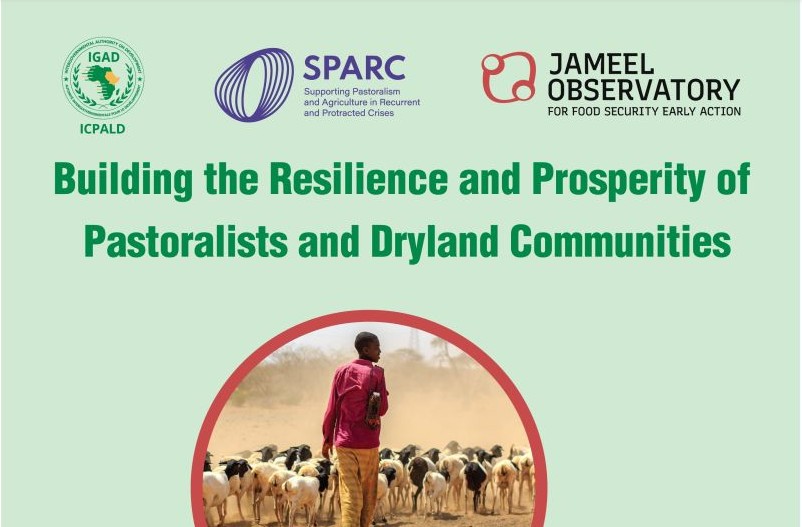
On 9 October, we are very pleased to welcome Dr. Jackson Wachira and Ms. Nancy Balfour speaking at our fifth seminar on ‘The mixed resilience outcomes of water interventions in the Horn of Africa drylands.’
In recent years, development and humanitarian actors in the Horn of Africa have used the concept of resilience to design and justify the establishment of diverse water supply systems. The primary aim of these interventions is to enhance pastoralists’ resilience to droughts and other shocks. But is this always possible? Based on primary data collected in Marsabit County in northern Kenya and the Somali region of Eastern Ethiopia, this seminar challenges the oversimplified narrative that links dryland water-supply systems directly to resilience.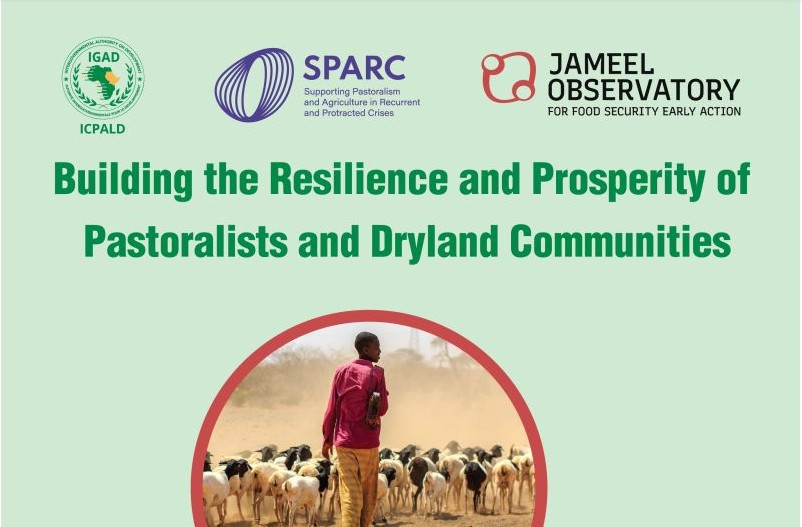
We will show that while water infrastructure enhances short-term water access, it also disrupts mobility, generates socio-political conflict, results in ill health, exacerbates inequality, and results in range degradation. These outcomes are a major trade-off because the disrupted processes and dynamics are integral for pastoral resilience. We will argue that dryland water-supply systems can only contribute to resilience when well-governed and aligned with pastoral socio-ecological dynamics and processes related to mobility, resource access, diversification and social networks – conditions that are rarely met in many dryland contexts.

Jackson Wachira is a Post-Doctoral Research Fellow at the Centre for Humanitarian Change. Jackson has a PhD in Climate Change and Adaptation from the University of Nairobi. He has published on land control, biodiversity conservation, natural resources management and climate change adaptation in Horn of Africa pastoral production systems. His current research assesses the resilience of community health systems against climate-related hazards and co-develops locally tailored strategies to enhance this resilience in arid and semi-arid lands. He previously worked as Research and Programs manager at the Centre for Research and Development in the Drylands where he supported the design and operationalisation of locally embedded research and development programs, including the current study.
Comments (0)
No comments yet. Be the first to share your thoughts!
Leave a Comment
Your comment will be published after admin review.