The Famine Early Warning Systems Network (FEWS NET) is teaming up with ReliefWeb to share its latest analyses, data, and resources related to the world’s most pressing food emergencies. FEWS NET’s latest reporting on global food security is available via ReliefWeb updates.
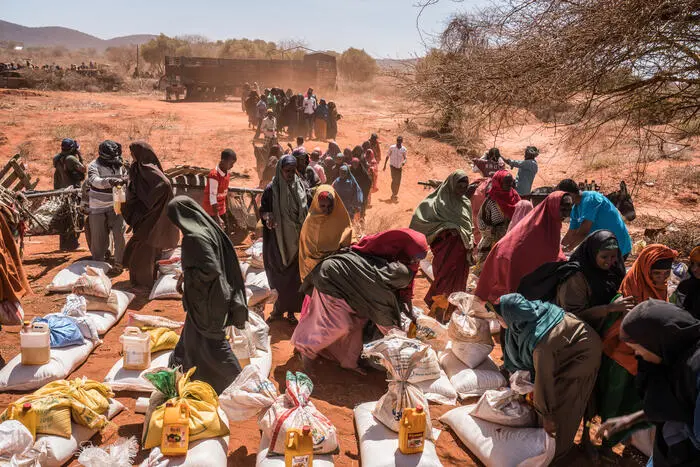
Extreme hunger and malnutrition remain a stark reality throughout parts of sub-Saharan Africa. In countries like Somalia, Ethiopia, and South Sudan, millions of people face a daily struggle to meet their food and nutritional needs due to the combined effects of conflict, changing weather patterns, and economic instability.
The same factors that drive hunger in Africa also pose persistent challenges to the collection of agricultural data and, in turn, the production of key agricultural statistics.
Limited infrastructure, environmental obstacles, and other barriers have led to a massive agricultural data gap across sub-Saharan Africa.
This poses significant challenges for programs like the Famine Early Warning Systems Network (FEWS NET), which provides forecasts of hunger crises up to eight months before they occur.
FEWS NET’s forecasting mechanisms require reliable, up-to-date data on the variety of factors that contribute to hunger emergencies, including agricultural production.
Analysts need agricultural data and statistics to understand how a growing season is progressing, what a harvest may bring, and when food stocks may run out.
Closing the Data Gap
To bridge this data gap, FEWS NET convened its network of science partners, data analysts, and like-minded researchers to form the Crop Production Working Group. They set out to build the world’s most extensive collection of African agricultural production data, accessible to the public via the FEWS NET Data Explorer (FDE).
However, this work was far from easy, and the group quickly realized they faced a common problem. Uncoordinated efforts when collecting and preparing analysis-ready data often led to duplicated work, taking up precious time and resources.
To streamline their efforts, the working group teamed up with a powerhouse of organizations and academic institutions to form the HarvestStat Subnational Data Consortium.
This powerful collaboration includes key FEWS NET science partners like NASA Harvest at the University of Maryland’s Department of Geographical Sciences, the Climate Hazards Center at the University of California, Santa Barbara, and the U.S. Geological Survey.
The consortium also draws on the expertise of researchers from:
Harvard, Dartmouth University, the University of Minnesota, the University of Michigan, the University of Delaware, the University of Illinois, the University of British Columbia, the University of Manitoba, Leipzig University, the Stockholm Environment Institute, the International Food Policy Research Institute, the German Centre for Integrative Biodiversity Research, and the European Commission’s Joint Research Centre.
Their mission? To make agricultural production data and statistics accessible and transparent for countries around the world, starting within Africa.
The World’s Largest Crop Dataset for Africa
The first major outcome of this collaboration is HarvestStat Africa, an open-source dataset launched via GitHub in April and made available via the HarvestStat website in September. It’s the world’s largest, high-quality collection of subnational crop production data, featuring over 574,000 agricultural records with data points spanning from 1980 to 2022.
This groundbreaking resource offers a detailed look at crop production, harvested areas, and crop yields for 33 countries and 94 crop types.
“Years of work by FEWS NET have laid the foundation for this consortium, and now we’re seeing that work come to fruition with the provision of open, accessible data for all,” Dr. Weston Anderson, an Assistant Research Professor at the University of Maryland, said. “The consortium is expanding every month with new members signing on to contribute.”
How These Data are Making a Difference
HarvestStat Africa offers data at the county, district, and municipal level for 15 countries, and at the state or province level for 18 countries.
The dataset is already making an impact by:
● Localizing Food Security Analysis: Supports research that informs early warning systems by providing historical data from local yields and crop production levels. Early warnings help to alert humanitarian organizations of potential crises so they can target aid more effectively.
● Enhancing Forecasts: Improves crop yield models that help researchers compare past and current conditions to predict potential food shortages.
● Accelerating Science: Facilitates a global collaboration of scientists conducting research with the largest, public database of crop production statistics ever gathered.
● Offering Risk Management Solutions: Supports the development of indices and the validation of qualifying events for parametric insurance — a type of insurance that pays a predetermined amount when a specific, measurable event occurs. For instance, a farmer with a parametric crop policy could receive a payout if rainfall drops below a particular threshold in their area.
To learn more, check out the new HarvestStat website. The consortium plans to expand its work to address agricultural data gaps in the Middle East and Asia next.
You can also subscribe to FEWS NET updates to receive agroclimatology and food security forecasts directly in your inbox. Follow FEWS NET on Facebook and LinkedIn for the latest updates.