By NECJOGHA Climate Desk – Sudan
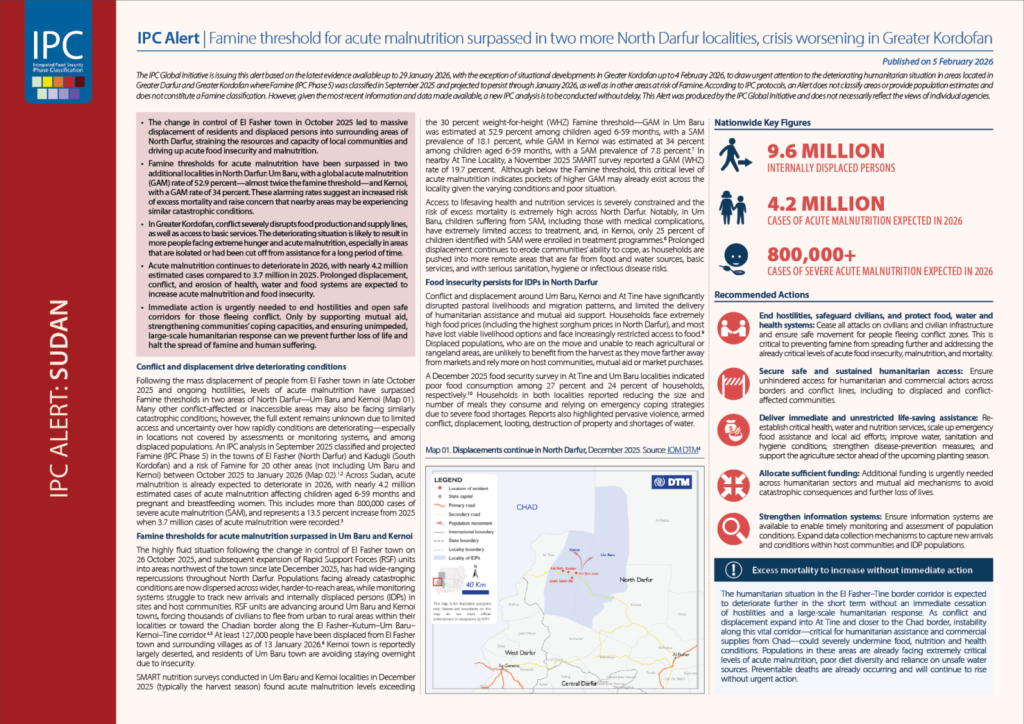
Assessments conducted in December 2025 in Um Baru and Kernoi (North Darfur) found acute malnutrition rates well above the 30 percent weight‑for‑height (WHZ) Famine threshold. In Um Baru, global acute malnutrition (GAM) among children aged 6–59 months was estimated at 52.9 percent, with 18.1 percent identified as suffering from severe acute malnutrition (SAM). In Kernoi, GAM was recorded at 34 percent, with 7.8 percent SAM for the same age group.
Many other conflict‑affected or inaccessible areas may also be facing similarly catastrophic circumstances, but limited access and uncertainty over how quickly conditions are worsening make the full scale of the crisis unknown.
In Greater Kordofan, the intensifying conflict is driving a rapid deterioration in food security, with more people likely to face extreme hunger, acute malnutrition, and rising hunger‑related deaths. Famine was already confirmed in the town of Kadugli in the September 2025 analysis, and very severe conditions were projected in Dilling and the Western Nuba Mountains.
Immediate action is urgently needed to stop hostilities, secure safe corridors for civilians, reinforce community coping systems, support local mutual aid, and enable a large‑scale, unimpeded humanitarian response to prevent further loss of life and halt the spread of famine and human suffering.
This IPC Alert does not classify areas, estimate populations, or constitute a Famine classification. It reflects information available based on latest evidence available up to 29 January, with the exception of situational developments in Greater Kordofan that are reflected up to 4 February, and signals a deepening humanitarian emergency following the IPC analysis published on 3 November 2025, which classified Famine (IPC Phase 5) in El Fasher and Kadugli and identified 20 areas across Greater Darfur and Greater Kordofan as being at risk.
Read more
Download the IPC Alert