
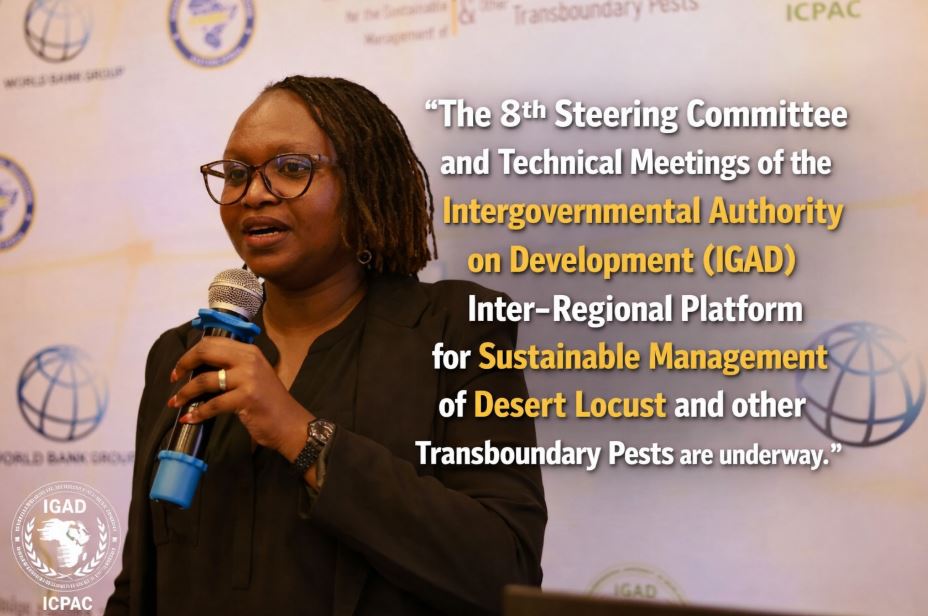
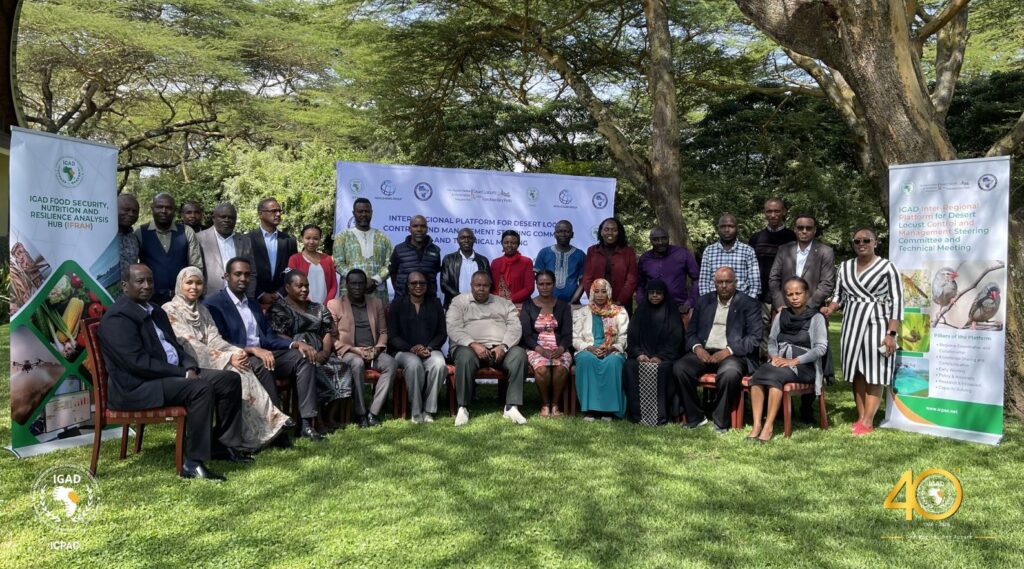
Naivasha, May 6 (NECJOGHA) – The 8th Steering Committee and Technical Meetings of the Intergovernmental Authority on Development (IGAD) The Inter‑Regional Platform for Sustainable Management of Desert Locust and Other Transboundary Pests convened in Naivasha this week, focusing on advancing regional preparedness against pest outbreaks.
Hosted by the IGAD Climate Prediction and Applications Centre (ICPAC), the two‑day meeting (May 6–7) brought together National Focal Points and partners, including CABI, the Regional Centre for Mapping of Resources for Development (RCMRD), and the International Centre of Insect Physiology and Ecology (ICIPE). The discussions aim to align pest management strategies and move beyond reactive responses toward anticipatory action.
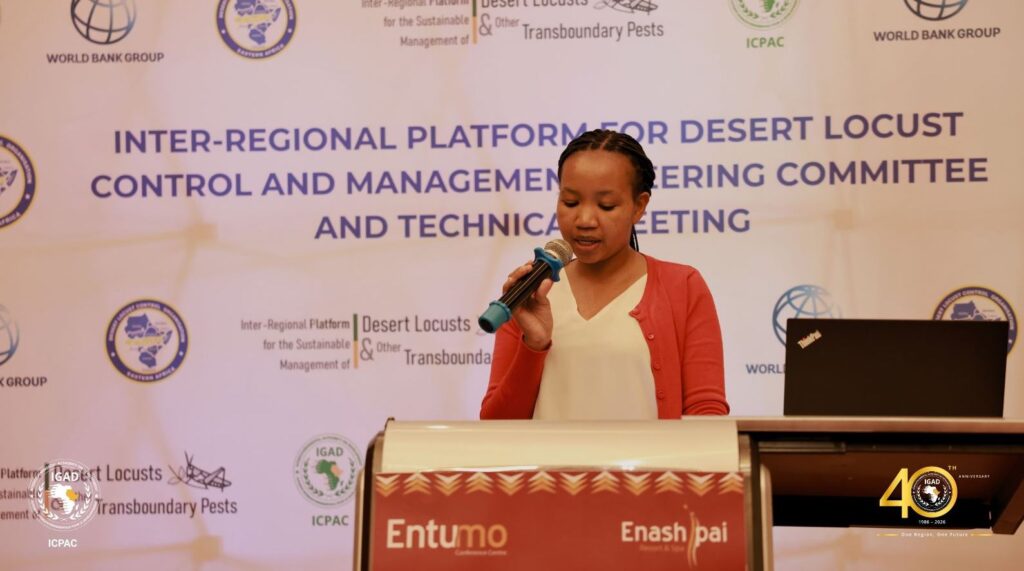
“We are refining the Regional Action Plan to embed resilience and preparedness,” said an ICPAC representative. According to ICPAC’s LinkedIn post, expected outcomes include an endorsed Regional Action Plan, a shared understanding of the current status of transboundary pests, and a strategic resource roadmap to secure future funding and partnerships.
Past locust invasions across East Africa highlighted the need for coordinated surveillance and forecasting. IGAD noted that fragmented responses during the 2020 outbreak delayed early interventions, while CABI warned that unchecked pest cycles could severely impact food security. ICIPE added that climate variability is intensifying pest risks, and RCMRD emphasized the importance of mapping technologies for risk‑informed decision‑making.
ICPAC, IGAD’s specialized climate center, plays a vital role in providing regional climate forecasts, early warning systems, and risk analysis. Its expertise ensures that pest management strategies are guided by science, linking surveillance data with climate predictions to support anticipatory action across member states.
Next steps include finalizing the Regional Action Plan, mobilizing partner commitments, and presenting outcomes at upcoming IGAD forums. ICPAC said the platform will continue to strengthen connections between pest surveillance, forecasting, and early action.
Authorities are urging swift regional collaboration to mitigate future pest threats.