By Luganda David
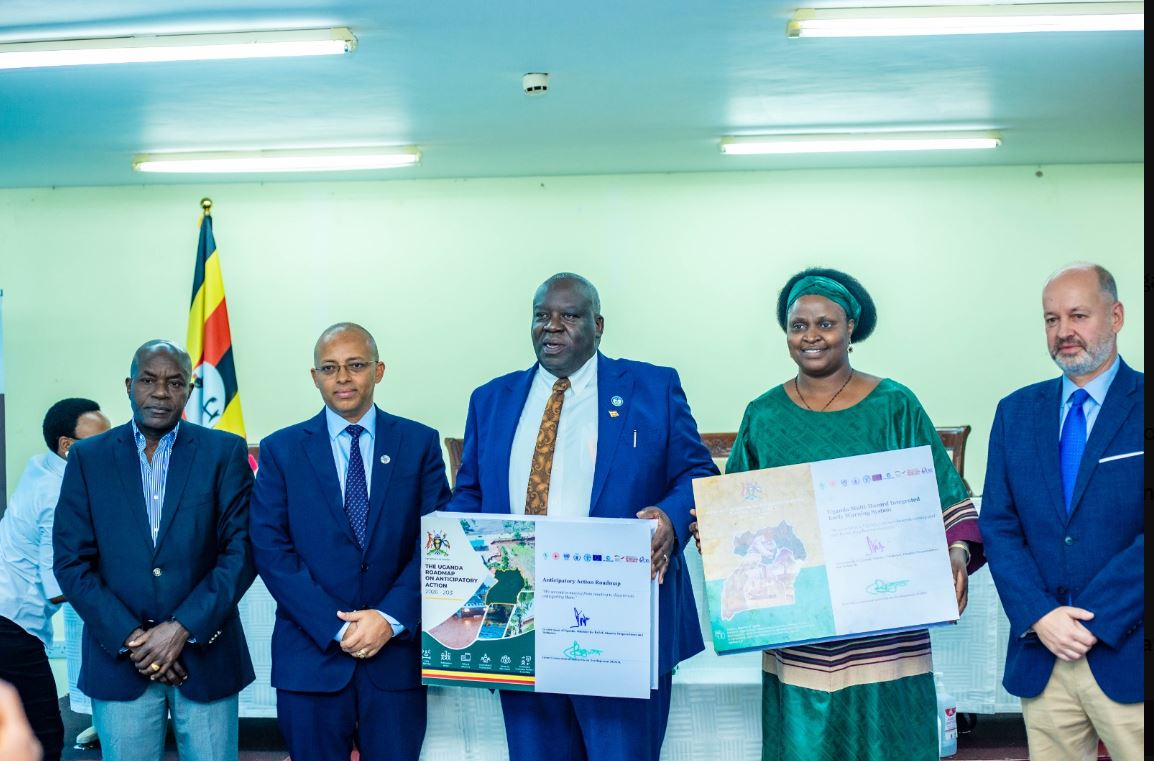
KAMPALA, July 3 – Uganda has inaugurated the Uganda Multi‑Hazard Integrated Early Warning System (U‑MHIEWS) and the National Anticipatory Action Roadmap, marking a major step in strengthening resilience and protecting communities before disasters strike.
Uganda becomes the first country in Eastern Africa to introduce a multi‑hazards integrated monitoring platform and the fifth to adopt a national anticipatory action roadmap, following Ethiopia, Kenya, South Sudan and Somalia.
The inauguration ceremony was presided over by Hon. Sam Engola, Minister for Relief, Disaster Preparedness and Refugees; Hon. Alex Kakooza, Permanent Secretary at the Office of the Prime Minister; the State Minister; and Mrs. Joselyn Bigirwa, Head of the Intergovernmental Authority on Development (IGAD) Mission to Uganda. Representatives from the IGAD Climate Prediction and Applications Centre (ICPAC), the World Food Programme (WFP), and the Food and Agriculture Organization of the United Nations (FAO) also attended.

Officials said the new system will enable near real‑time monitoring of major hazards in Uganda and provide early warning information to trigger timely action.
“This milestone strengthens resilience, promotes anticipatory action, protects lives and advances risk‑informed development,” said Mrs. Bigirwa. She reiterated IGAD Executive Secretary Dr. Workneh Gebeyehu’s call for the region to increase investments in early warning systems to bolster preparedness for inevitable disasters.
Launching the roadmap, Minister Engola said Uganda can no longer afford to wait for disasters to occur before responding.
“The Action Roadmap reflects the Government’s commitment to shifting from reactive disaster response to proactive preparedness, promoting early action to protect lives and livelihoods, safeguard the country’s development gains, reduce humanitarian response costs and strengthen national resilience,” Engola said.
He noted that climate change has made disasters more frequent and severe, increasing the urgency for preparedness.
The initiatives were delivered by the Government of Uganda with support from the IGAD Secretariat and partners including the Food and Agriculture Organization of the United Nations (FAO), the World Food Programme (WFP), the United Nations Office for Disaster Risk Reduction (UNDRR), and the World Bank Africa, with additional backing from the German Federal Foreign Office and the European Civil Protection and Humanitarian Aid Operations (EU ECHO).
United Nations Secretary‑General António Guterres has called for every person on Earth to be protected by a life‑saving, multi‑hazard early warning system by the end of 2027 under the Early Warnings for All initiative.
What is Anticipatory Action?
Anticipatory Action refers to measures taken before disasters strike, based on forecasts and risk analysis, to reduce impacts on people, livelihoods and economies. It shifts humanitarian response from reactive aid after crises to proactive preparedness and early action.
What is U‑MHIEWS?
The Uganda Multi‑Hazard Integrated Early Warning System (U‑MHIEWS) is a national platform designed to monitor multiple hazards in near real‑time, issue alerts, and ensure that early warnings reach communities quickly and reliably. It connects scientific forecasts with practical action to save lives and resources.
Uganda’s government said the roadmap and U‑MHIEWS reflect a shift toward anticipating disasters rather than reacting to them, ensuring early warning leads to early action that safeguards development gains and strengthens resilience.