KAMPALA, July (NECJOGHA) – Uganda is grappling with worsening drought conditions as El Niño weather patterns drive drier‑than‑usual conditions across much of the country, with the Karamoja sub‑region bearing the brunt, according to the Uganda Drought Outlook Bulletin, July 2026, issued by the Office of the Prime Minister.
The bulletin said the Department of Meteorological Services projects unusually dry conditions will persist through August, limiting recovery prospects in already stressed areas. “Field observations and climate analysis indicate that there are already mild to moderate drought conditions in Karamoja, Southwestern, Western and parts of Central sub‑regions,” the bulletin noted. Kotido and Kaabong districts in Karamoja are the worst affected, with food stocks and water supplies severely depleted.
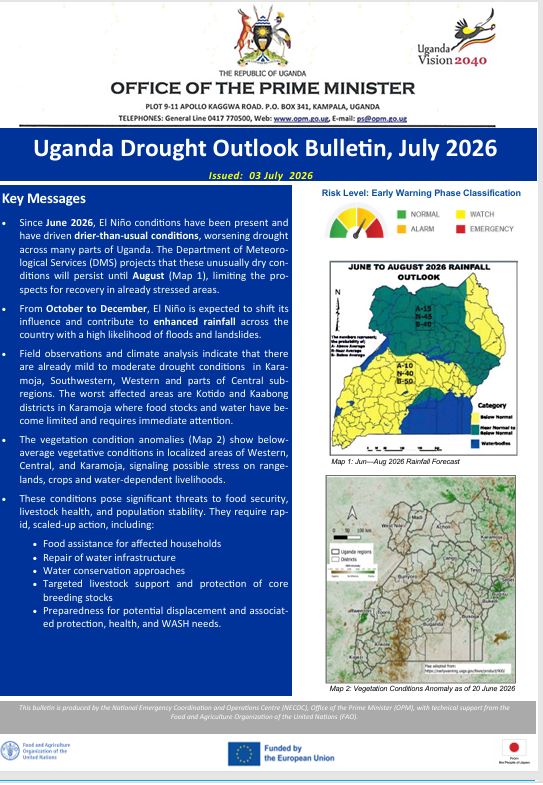
Vegetation indices show below‑average conditions in localized areas of Western, Central and Karamoja, signaling stress on rangelands, crops and water‑dependent livelihoods. The bulletin warned of “significant threats to food security, livestock health, and population stability” unless rapid, scaled‑up action is taken, including food assistance, repair of water infrastructure, and targeted livestock support.
The report said about 473,000 people in Karamoja are facing acute food insecurity between April and July, with 41,000 in Emergency (IPC Phase 4) and 432,000 in Crisis (IPC Phase 3). Household food stocks from the 2025 harvest are depleting rapidly, and the lean season is beginning under “exceptionally adverse conditions.”
Livestock health is also deteriorating, with risks of disease outbreaks such as peste des petits ruminants in goats and contagious bovine pleuropneumonia in cattle. Pastoral households are moving herds longer distances and earlier than usual in search of pasture, raising the risk of resource‑based conflict with neighboring communities.
The Uganda Drought Outlook Bulletin concluded that the June–August season “poses severe humanitarian challenges, particularly in the Karamoja, Southwestern and Western sub‑regions.” It warned that the convergence of depressed vegetation indices, below‑normal rainfall forecasts and warmer‑than‑average temperatures creates conditions for acute food insecurity, livestock mortality and potential displacement. “The severity of conditions in Karamoja demands urgent prioritization, with immediate scale‑up of food assistance, livestock support, and protection services,” it said.
The Government of Uganda, represented by Prime Minister Rt. Hon. Robinah Nabbanja, has flagged off relief food to be distributed to communities in Karamoja. The consignment includes 200,000 kilograms of maize flour and 100,000 kilograms of beans, aimed at stabilizing households most affected by the drought‑induced food insecurity.
Uganda has also launched its Anticipatory Action Roadmap, designed to ensure the country does not wait for drought to strike before responding. The roadmap outlines how early warning data, satellite monitoring, and ground assessments can trigger pre‑planned interventions such as food distribution, livestock support, and water conservation measures. Officials say operationalizing the roadmap will be critical to building resilience and reducing the humanitarian toll of climate shocks.
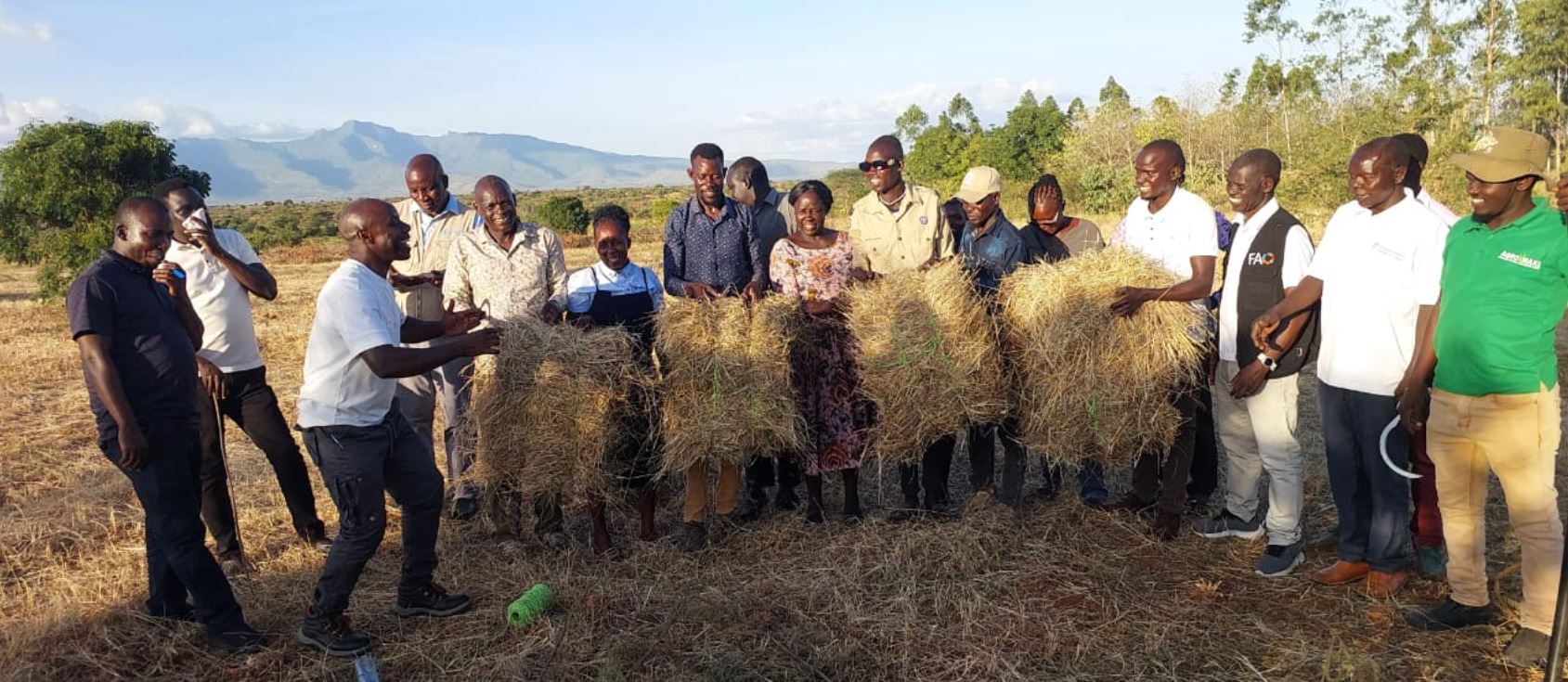
Uganda’s government, with support from international partners, is urging communities to conserve water, adopt kitchen gardening, and optimize herd sizes, while district governments were asked to strengthen disaster management committees and enforce rangeland bylaws.
Development agencies were called on to support climate‑smart agriculture, monitor markets, and facilitate peacebuilding to reduce risks of conflict as herders move into new grazing areas.